
Foundation of the Museum
The Dadiani Palace Historical-Architectural Museum may confidently be regarded as an institution of international standing. Based on the materials preserved within, it is rich in specimens of archaeology, ethnography, applied and fine arts.
Originally, it was established on the basis of the nationalization of the property of the Princes of Samegrelo, the Dadiani family, and its founder and creator was Akaki Chanturia, educated in Europe.
The Dadianis left behind a rich heritage, which was further enriched by their familial ties with the Imperial Court of France, imparting an additional dimension to its legacy.
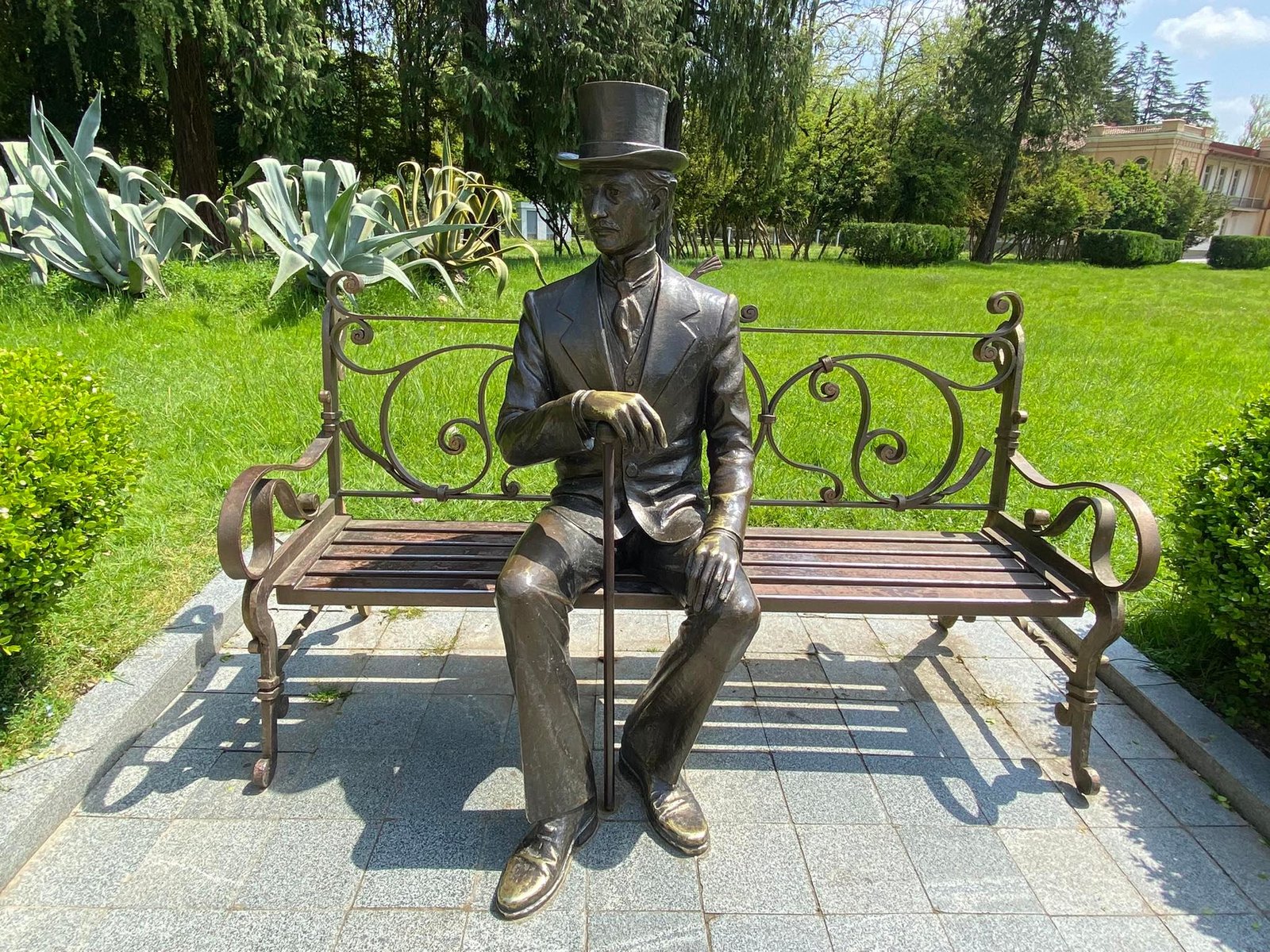
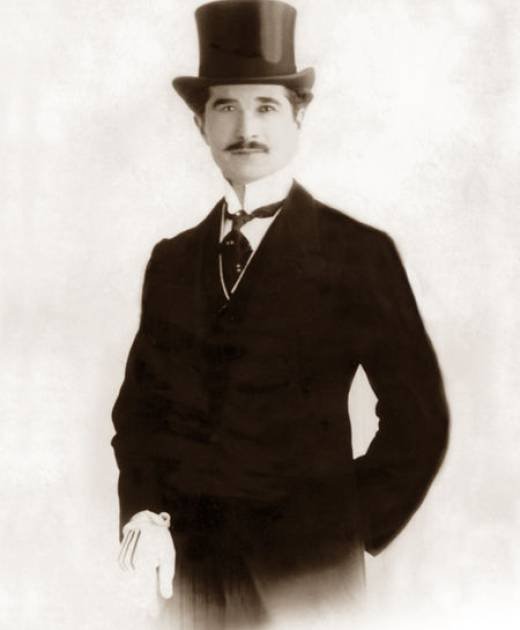
Their legacy was entrusted to worthy successors, and foremost among them must be mentioned the contribution of Akaki Chanturia, the museum’s founder and first director. A man of whom the entire nation is proud, broadly educated, a true professional — one to whom all of Georgia is indebted. Without his knowledge, dedication, integrity, and professionalism, today we would not possess the priceless treasure known as the Dadiani Treasury. With great care and diligence, he collected and preserved the Dadiani heritage objects that had been dispersed across various churches, monasteries, and palaces.
Before reaching this stage, he had endured a difficult path in life. He was born in Jvari, in the village of Chkvaleri, into the family of priest Ivane Chanturia, being the fifth son of his parents. His father died early. He received his primary education at the Akhalsenaki Theological School, and upon graduating with distinction, he could have enrolled in the Tbilisi Theological Seminary without examination. However, he had different aspirations: he devoted himself to self‑development, studied languages, and worked in Batumi at the Rothschild factory, where he also began learning English.
At the beginning of the 20th century, he was already in England. As contemporaries recall, he disliked speaking about himself, especially about his activities in England, and could hardly be persuaded to say a word. Egnate Piphia, a well‑known physician and his fellow villager, noted that he had learned from Akaki’s brother about how he lived in England, though even to him Akaki revealed little. What Piphia did learn was that Akaki served in a museum, took part in geological and archaeological expeditions, and carved his own path in life and science through talent and ability.
Upon arriving in London, he was engaged by a prominent family as a teacher of the Russian language. He taught the children while also studying English himself. The head of the household was a particularly attentive man, and with his support Akaki completed school and entered the Faculty of Geology at the University of London.
During his time in England, in order to support himself, he sought additional work beyond teaching. He sang and played music, carving with his own hands a chonguri (traditional Georgian string instrument) on which he performed. He often sang and appeared at evenings of folk art, where representatives of different nationalities had the opportunity to present their traditions. As his niece, Nina Chanturia, recalled, during one such successful performance he was awarded a framed photograph of Napoleon — a token of appreciation, for the audience greatly admired the sound of the chonguri.
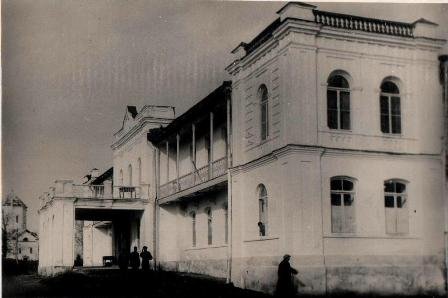
He graduated from the Faculty of Geology in London, where he also studied archaeology, ethnography, history, museum studies, and philology. He participated in scientific expeditions of the British Museum, and it was during this period that he traveled extensively around the world.
In his personal records, the following countries and regions are listed: “Almost all the states of Eurasia, North and South America, Australia, New Zealand, Asia, the Archipelago, India, Arabia, Palestine…”
In 1912 he returned to Georgia, collected and classified geological and paleontological material, and organized a model exhibition in the large ancestral oda (traditional Megrelian hall). His qualification thesis, “Geology of Georgia”, was devoted to this subject and was published in English in London in 1919.
In 1913 he once again went abroad, studying at the London Institute of Physiological Sciences and at the College of Arts, as well as at the Royal College of the University of London and the College of Arts. He was awarded the academic degree of Bachelor of Science at the University of London. He also studied in America, at Barrett College of the University of North Carolina. As recalled by his niece: “I have seen his diploma and the gown he received to mark the defense of his degree.”

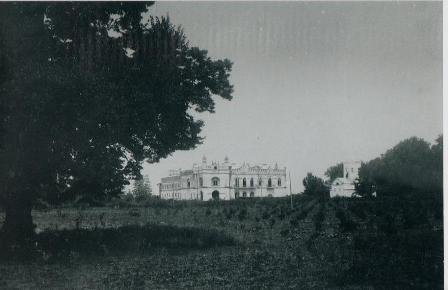
Since 1920 he was in Georgia. Egnate Piphia recalls this episode with interest: “In Zugdidi I learned that Chanturia had arrived together with his wife and a small child, who must have been about one year old. I went to the hotel; Akaki was standing on the balcony. I introduced myself and spoke to him in Mingrelian.”
Akaki had a very pleasant appearance. He was slender, did not wear a beard, his moustache was neatly trimmed, and his eyes were lively and dark. He was of a calm disposition, a gentle conversationalist, often laughing heartily during conversation. He was a cheerful man, yet at the same time possessed a most modest and courteous character.
Until 1921 he remained in the village, frequently visiting the capital and the newly established university. He worked in museums, archives, and libraries, and was even offered a position at the university, which he declined.
He also received an offer from the Government of the Democratic Republic of Georgia to serve as Minister of Foreign Affairs, but he refused this as well, since his true aspiration was the founding of a museum.
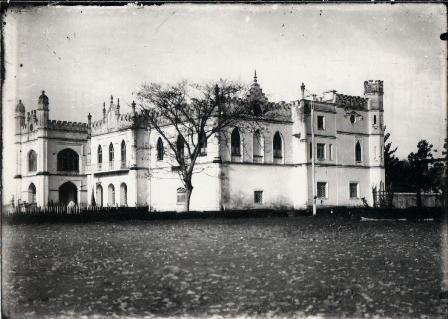

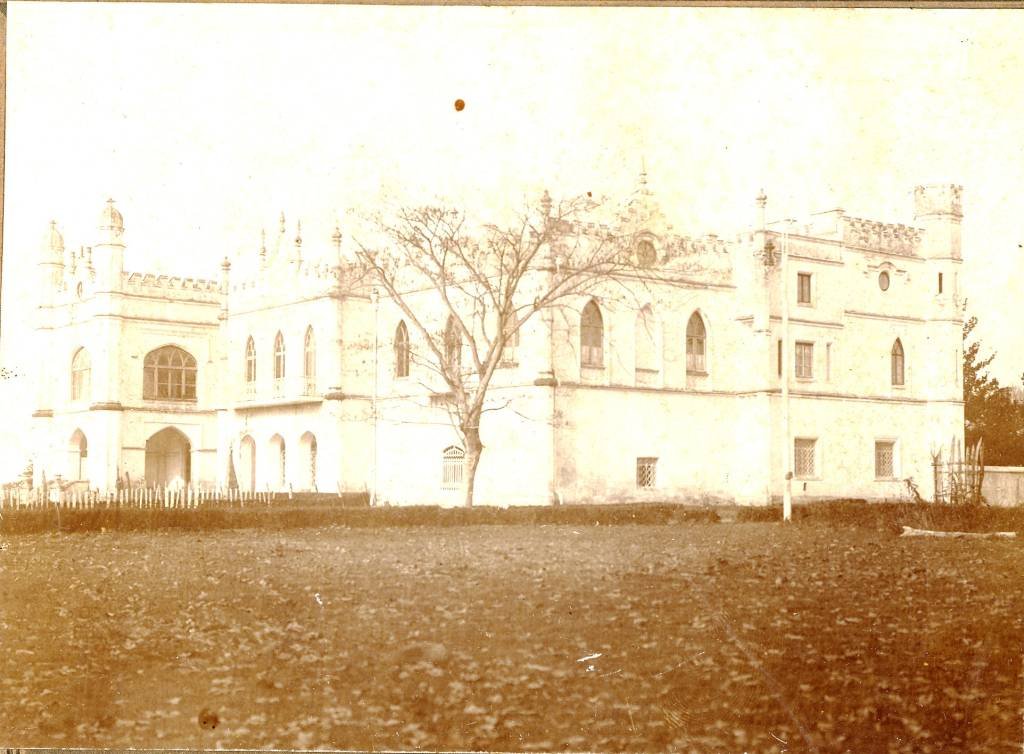
He fulfilled this dream, and in 1921, through great effort and despite countless obstacles, the Museum of Samegrelo was opened on 1 May. Akaki Chanturia was appointed its first director, a position he accepted and immediately undertook his work.
He received an official mandate which stated: “By order of the People’s Commissar of Education and the Main Directorate of Museums, you are appointed Director of the ‘Museum of Samegrelo’ in Zugdidi. The museum must be organized in the Royal Palace; therefore, you are entrusted with the task of collecting all museum objects.”
As noted above, despite numerous obstacles, a remarkable exhibition of the Dadiani collection was held, showcasing examples of fine and applied arts that, to this day, have not lost their relevance. Even now, visitors remark upon the cultural refinement of that exhibition.
In subsequent years, the museum’s directors endeavored to contribute to the development of museum work. Their efforts met with varying degrees of success, yet one fact remains clear: all of them looked to him as their guiding reference.
Event formats
Satisfying your taste, creating memories one bite at a time
Crafting culinary memories
Sed ut perspiciatis unde omnis iste natus error sit voluptatem accusantium doloremque laudantium, totam rem aperiam. Sed ut perspiciatis unde omnis.
Gourmet cuisine
Sed ut perspiciatis unde omnis iste natus error sit voluptatem accusantium doloremque perspiciatis.
Modern catering
Sed ut perspiciatis unde omnis iste natus error sit voluptatem accusantium doloremque perspiciatis.
The art of serving
Sed ut perspiciatis unde omnis iste natus error sit voluptatem accusantium doloremque perspiciatis.
სიახლეები
Adipiscing elit, sed do eiusmod tempor incididunt ut labore et dolore magna aliqua. Ut enim ad minim veniam, quis nostrud exercitation ullamco.
Adipiscing elit, sed do eiusmod tempor incididunt ut labore et dolore magna aliqua. Ut enim ad minim veniam.